




|
|
ISSN 3081-1392(Print)
|
| 杂志简介 | 更多... |
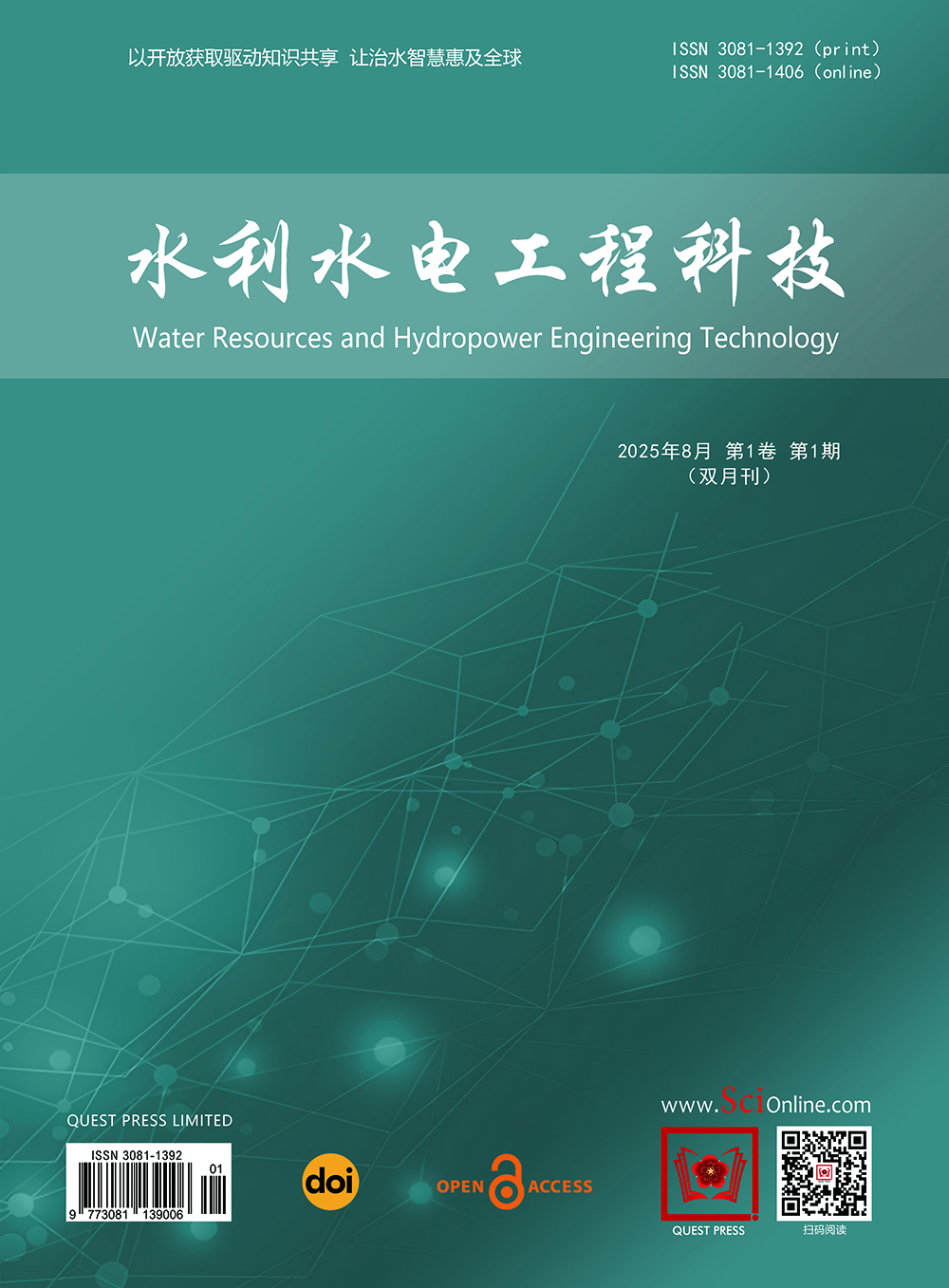
期刊名称:《水利水电工程科技》
英文刊名:Water Resources and Hydropower Engineering Technology
国际标准刊号:
ISSN 3081-1392 (Print)
ISSN 3081-1406 (Online)
出版机构:Quest Press Limited
出版模式:金色开放获取,全文永久免费
出版语种:中文
出版频率:双月刊
学科类别:水利工程与能源科技
投稿语言:中文
中国区发行:中国国际图书贸易集团有限公司(进口申请中)
期刊介绍
《水利水电工程科技》是一本聚焦水资源可持续利用与水电能源创新发展的国际化学术期刊。本刊致力于发表水文水资源、水工结构、水力机械及流域管理等领域的前沿研究成果与技术创新,服务于水利工程师、科研人员及政策制定者,旨在应对全球水资源安全、能源转型与气候变化适应等重大挑战。
一、核心定位与特色
本刊定位于成为连接水利基础理论研究与重大工程实践的桥梁。核心特色在于强调研究的创新性、交叉性与工程适用性,重点关注水资源高效利用、水电工程安全、智慧水利系统及生态友好型技术,鼓励多学科融合研究,推动科研成果向实际工程的转化应用。
二、约稿范围
本刊诚邀以下领域的原创研究、技术报告及综述论文:
水文与水资源:水文模拟与预报、水资源规划与配置、气候变化对水循环影响、干旱与洪水风险管理
水工结构与岩土工程:大坝安全与监控、堤防工程技术、高边坡稳定、地下洞室围岩稳定性
水力机械与系统工程:水轮机优化设计、抽水蓄能技术、电站运行优化、设备状态监测与故障诊断
河流海岸工程:河道整治与生态修复、海岸侵蚀防护、泥沙运动机理、河口综合治理
灌溉与排水工程:节水灌溉技术、灌区现代化改造、排水系统优化、农业水土环境调控
水利信息技术:智慧水利系统、水文监测物联网、BIM技术在水利工程中的应用、数字孪生流域
水利经济与管理:水利项目投资评价、水价形成机制、流域综合管理、水利工程全生命周期管理
三、投稿指南
稿件要求:投稿须为原创性、未公开发表的学术成果,应具有明确的理论创新或技术突破,数据可靠,分析严谨,结论具有工程指导价值。本刊实行双向匿名同行评议制度。
投稿语言:稿件正文须以中文撰写。
必备元素:投稿时请提供以下完整的中英文信息:
文章标题
作者信息:所有作者的姓名、单位(中英文)、第一作者(或通讯作者)简介(含研究方向、邮箱)
摘要:中英文摘要,需包含研究目的、方法、关键结果与主要结论
关键词:3-5个中英文关键词
投稿系统:请通过官方在线系统提交:http://tg.scionline2025.com/01/
四、目标与愿景
本刊的愿景是成为水利水电工程领域的权威学术期刊与技术创新平台。我们的目标是构建产学研用深度融合的学术共同体,通过传播前沿研究成果与创新工程技术,推动水资源可持续利用与清洁能源开发,为全球水安全与能源转型提供科技支撑。
五、开放获取政策
本刊遵循金色开放获取模式。所有发表文章均采用知识共享署名4.0国际许可协议。文章发表后立即永久免费开放,允许任何用户基于合法非商业目的阅读、下载、复制、传播文章,但须恰当引用原作者并注明出处。协议详情:https://creativecommons.org/licenses/by/4.0/
六、索引与收录
本刊正积极推进在全球主要学术数据库的索引工作,规划申请收录:
国际核心数据库:SCI Expanded, Ei Compendex, Scopus, INSPEC, DOAJ, Google Scholar
区域性及中文数据库:中国知网、万方数据、维普资讯、百度学术
七、加入我们
诚邀海内外水利水电领域学者专家加入我们的学术共同体,共同提升期刊质量与行业影响力。欢迎申请编委、副主编、同行评议专家等职位:
线上申请:http://tg.scionline2025.com/01/bw.asp
Journal Name: Water Resources and Hydropower Engineering Technology
ISSN:
ISSN 3081-1392 (Print)
ISSN 3081-1406 (Online)
Publisher: Quest Press Limited
Publishing Model: Gold Open Access, permanently free full-text access
Language: Chinese
Frequency: Bimonthly
Discipline: Hydraulic Engineering and Energy Technology
Submission Language: Chinese
Distribution in China: China International Book Trading Corporation (Import application in progress)
Journal Introduction
Water Resources and Hydropower Engineering Technology is an international academic journal focusing on sustainable water resources utilization and innovative hydropower energy development. It publishes cutting-edge research and technological innovations in hydrology, hydraulic structures, hydro-mechanical systems, and watershed management, serving water resources engineers, researchers, and policymakers to address global challenges in water security, energy transition, and climate change adaptation.
1. Aims and Scope
This journal serves as a bridge connecting fundamental research in water resources with major engineering practices. Its distinctive feature lies in emphasizing innovation, interdisciplinary approach, and engineering applicability, focusing on efficient water resources utilization, hydropower project safety, smart water systems, and eco-friendly technologies. We encourage multidisciplinary research to facilitate the translation of scientific achievements into practical engineering applications.
2. Call for Papers
We invite original research, technical reports, and review papers in the following areas:
Hydrology & Water Resources: Hydrological modeling and forecasting, water resources planning and allocation, climate change impacts on water cycle, drought and flood risk management
Hydraulic Structures & Geotechnical Engineering: Dam safety and monitoring, levee engineering, slope stability, underground cavern surrounding rock stability
Hydro-Mechanical Systems: Turbine optimization design, pumped storage technology, plant operation optimization, equipment condition monitoring and fault diagnosis
River & Coastal Engineering: River regulation and ecological restoration, coastal erosion protection, sediment transport mechanisms, estuarine comprehensive management
Irrigation & Drainage Engineering: Water-saving irrigation technologies, irrigation district modernization, drainage system optimization, agricultural water-soil environment regulation
Water Information Technology: Smart water systems, hydrological monitoring IoT, BIM applications in hydraulic engineering, digital twin watersheds
Water Economics & Management: Water project investment evaluation, water pricing mechanisms, integrated watershed management, hydraulic engineering life-cycle management
3. Submission Guidelines
Manuscript Requirements: Submissions must be original, unpublished academic works with clear theoretical innovation or technological breakthrough, reliable data, rigorous analysis, and conclusions with engineering guidance value. The journal employs a double-blind peer-review system.
Submission Language: Manuscripts must be written in Chinese.
Required Elements: Provide complete information in both Chinese and English:
Article Title
Author Information: Names and affiliations of all authors, corresponding/first author biography (including research interests and email)
Abstract: Structured abstracts covering purpose, methods, key results, and main conclusions
Keywords: 3-5 keywords
Online Submission: Submit via official system: http://tg.scionline2025.com/01/
4. Vision and Mission
Our vision is to become an authoritative academic journal and technological innovation platform in water resources and hydropower engineering. We aim to build an academic community deeply integrating industry, university, research and application, promoting sustainable water resources utilization and clean energy development through disseminating cutting-edge research and innovative engineering technologies, providing scientific and technological support for global water security and energy transition.
5. Open Access Policy
This journal follows the Gold Open Access model. All published articles are licensed under a Creative Commons Attribution 4.0 International License. Articles become immediately and permanently free upon publication, allowing any user to read, download, copy, and distribute for any lawful non-commercial purpose, with proper attribution. License details: https://creativecommons.org/licenses/by/4.0/
6. Indexing and Abstracting
The journal is actively pursuing indexing in major academic databases:
International Databases: SCI Expanded, Ei Compendex, Scopus, INSPEC, DOAJ, Google Scholar
Regional & Chinese Databases: CNKI, Wanfang Data, VIP, Baidu Scholar
7. Join Us
We invite distinguished scholars and experts worldwide in water resources and hydropower engineering to join our academic community. Applications for editorial board members, associate editors, and peer reviewers are welcome:
Online Application: http://tg.scionline2025.com/01/bw.asp
| 往期阅览 | 更多... |
| 连续排污监测控制系统在火力发电厂的实践应用 | ||||||
Continuous Blowdown Monitoring and Control System in Thermal Power Plants: Practical Application |
 |
|||||
|
||||||
| 杨海利 乔玉新 Haili Yang Yuxin Qiao | ||||||
| 摘要:作为锅炉运行的核心工质,水在循环过程中会因蒸发浓缩导致炉水浓度上升,进而形成水垢与水渣。维持锅炉给水及炉水的水质达标,是保障锅炉安全节能运行的基础条件。排污作为降低炉水浓度的关键手段,其科学性与精准性直接影响工业锅炉的安全经济运行。本文从应用需求、技术实现及实际效能三个维度,系统论证了连续排污监测控制系统在火力发电厂的应用价值。 | ||||||



| 基于“两级管理”体系的水电项目经营活动分析研究 | ||||||
Research on the Operational Activity Analysis of Hydropower Projects under the “Two-Level Management” System |
|
|||||
|
||||||
| 袁莉 Yuan Li | ||||||
| 摘要:本研究聚焦于水电项目这一资金密集型与技术复杂的重大基础设施领域,系统构建了覆盖全周期、多维度、动态调整的经营活动分析管理体系。通过“总部-项目现场”两级管理架构设计,整合工程技术、财务经济、环境社会等多专业分析要素,应用 BIM+GIS+IoT 融合技术,提出水电项目特色分析指标体系与典型分析方法,有效应对水电项目数据采集难、预测精度低、专业协同差等挑战,推动水电项目管理向数字化、实时化、智能化转型。 | ||||||
| 当前经济形势下水利施工企业困境及应对措施 | ||||||
Difficulties and Countermeasures of Water ConservancyConstruction Enterprises under the Current Economic Situation |
|
|||||
|
||||||
| 田春丹 Chundan Tian | ||||||
| 摘要:当前全球经济环境复杂多变,国内经济面临需求收缩、供给冲击和预期转弱三重压力。水利施工企业作为基础设施建设的重要力量,在迎来国家加大水利投资政策机遇的同时,也面临诸多挑战。本文深入分析了当前形势下企业面临的主要困境,包括市场竞争加剧导致利润压缩、成本持续上升、融资难度加大、管理模式落后以及科技创新与人才储备不足等问题,并提出了一系列系统性应对策略:加强战略管理与市场开拓,聚焦新基建与绿色项目;实施精细化成本管控;创新融资模式与资金结构优化;推动数字化转型与技术升级;加强人才队伍建设与核心能力培育。本研究旨在为水利施工企业克服困难、实现高质量发展提供理论与实践参考。 | ||||||
| 高压电机绝缘劣化诊断与全寿命运维策略 | ||||||
Diagnosis of Insulation Degradation in High Voltage Motors and Life Cycle Maintenance Strategy |
|
|||||
|
||||||
| 姚德才 Decai Yao | ||||||
| 摘要:高压电机作为工业生产和电力系统的重要设备,其绝缘性能直接关联到电机及电气系统的稳定性和安全性。随着使用年限的增加,高压电机的绝缘性能逐渐劣化,极大地增加了大型事故发生的概率。因此,对高压电机绝缘劣化进行准确的诊断,以及制定有效的全寿命运维策略显得尤为重要。本研究首先基于电机绝缘特性的变化,探讨了高压电机绝缘劣化的内在机理及其影响因素,并提出了一套综合的绝缘劣化诊断技术框架,该框架利用电气测试、化学分析和物理检测等手段,综合评估电机绝缘状态。在此基础上,研究还构建了针对高压电机的全寿命运维策略。该策略包括绝缘状态监测、劣化预警、健康评估和维护修复等环节,旨在通过科学的数据分析和决策,延长电机的使用寿命,提高运行效率和可靠性。通过实际案例的应用验证,该诊断技术和运维策略能够显著提高高压电机的故障预防能力和维护效率,为高压电机的运行提供了有力的保障。研究对促进高压电机绝缘性能的提升、保障电力系统的稳定运行具有重要的实用价值和理论意义。 | ||||||
| 基于底线思维的住宅韧性提升——以北京市房山区 周口店镇北下寺村、... | ||||||
Improvement of housing resilience based on bottom line thinking -- A case study on post-disaster reconstruction of Beixiasi Village and Hulupeng Village in Zhoukoudian Town, Fangshan District, Beijing |
|
|||||
|
||||||
| 刘强 Qiang Liu | ||||||
| 摘要:在 2023 年 7 月末至 8 月初,台风“杜苏芮”的残余环流给北京市带来了前所未有的挑战,尤其是房山区周口店镇北下寺与葫芦棚村,遭受了“23·7”特大暴雨及流域性洪水的重创,暴露了传统住宅体系在极端天气下的脆弱性。面对自然灾害的严峻考验,基于底线思维的住宅韧性提升成为迫切需求。本文旨在以周口店镇北下寺、葫芦棚村的灾后重建为研究对象,探讨如何利用 GIS 等现代技术手段,对两村进行全面的风险识别与评估,确定关键风险点和潜在威胁,构建更加安全、可持续的居住环境。 | ||||||
| 基于燃气-蒸汽联合循环电站全厂失电状态下的应急处置与实践 | ||||||
Emergency response and practice based on the power failure of the entire gas-steam combined cycle power station |
|
|||||
|
||||||
| 丁锴 Kai Ding | ||||||
| 摘要:燃气-蒸汽联合循环电站全厂失电将严重影响电站设备安全,通过示例电站两个阶段的故障及处理,有效应对电站外网失电、柴发自启不成功造成全厂失电,失电后有序组织柴发手动启动,恢复厂用电,恢复关键设备运行;待外网恢复后组织倒送厂用电,厂用电切换至正常供电模式,机组满足启动条件。这一合理有效的技术处理方案,经过实践检验,能够有效解决该类型电站全厂失电问题,保障设备安全。 | ||||||
| 水电站灯泡贯流式机组泡头动力柜风机控制方式优化改造 | ||||||
Optimization and transformation of fan control mode in power cabinet of bulb tubular unit of hydropower station |
|
|||||
|
||||||
| 张永胜 Yongsheng Zhang | ||||||
| 摘要:水电站灯泡贯流式机组泡头动力柜风机控制方式一般为常压、强迫通风、闭路循环,一次冷却。通风冷却系统主要由空气冷却器、风机、导风板、挡风板等组成。发电机的通风方式为强迫径向磁轭通风。发电机空气循环动力由安装在空冷器后风道内的 6 到 8 台风机产生,多数均存在高耗能,电机转速高,连续对机械磨损大,轴承易发损坏。 | ||||||
|
| ||
|
| ||
|
| ||
|
| ||
|
| ||
|
| ||
|
| ||
|
| ||
|
| ||
|
|